
POLICY OVER POLITICS
“A financially stable, high performing, responsive city government, is not a partisan position, it is a reasonable expectation shared by all San Diegans.”
-Richard Bailey
BAILEY SUPPORTS
-
The city must adopt zero-based budgeting, restructure City Hall to focus on core city services, implement managed competition to bid out services like trash collection, parks and facility maintenance, audit and reform the homeless services model, and make infrastructure funding a formulaic decision, not a political one.
Since 2015, the City's population has increased just 1% yet staffing is up 27% driven by an increase in middle management by 431%. Meanwhile performance across every department for nearly every metric is at or near all-time lows.
Restructuring City Hall to 2015 staffing levels would save $220M, completely closing the City's operational deficit. Adding a modest 12% productivity gain due to advances in technology over the past ten years would save another $95M. The combination of these two reforms would also reduce the City's annual pension obligations by about $120M annually.
If the City implements managed competition and transitions from an operational role to an oversight role, the City would save a minimum of $50M annually.
These reforms and others, including following the city's auditor recommendations on better asset management, would close the $610M gap while funding core city services and infrastructure. -
In a misguided effort to make up for irresponsible financial decisions, the city passed numerous fee increases to address the structural deficit.
These fee increases made San Diego even less affordable everyone, reduced access to public amenities, and have adversely impacted local businesses.
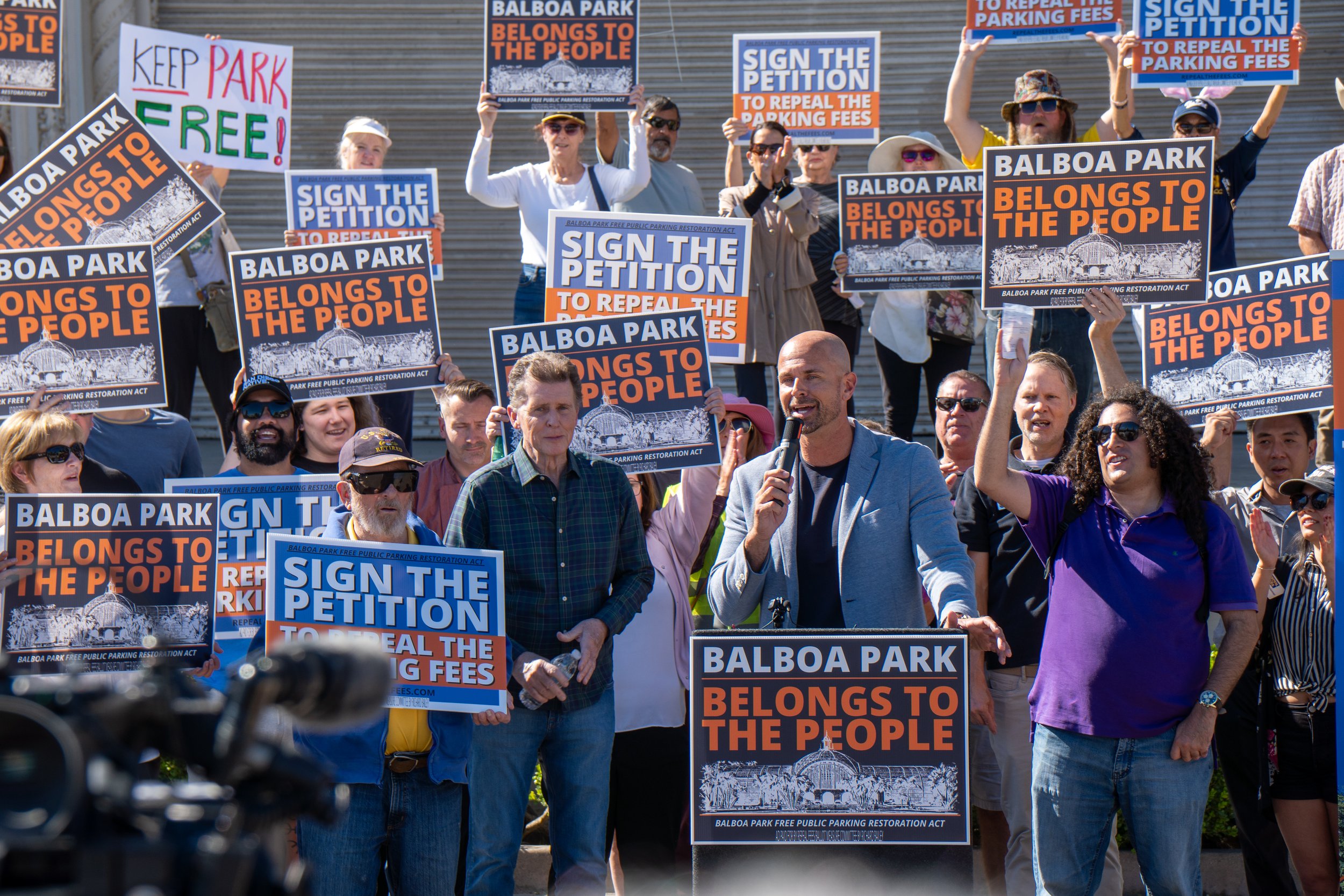
Balboa Park parking fees must be repealed entirely.
The increased downtown parking rates, surge pricing up to $20/hr, and extended enforcement hours must be reduced back to the prior rates of Q1 2025.
The increased adult recreation league fees must be reduced to allow for affordable recreational opportunities for all San Diegans.
These reforms would reduce everyday costs for San Diegans while forcing City Hall to prioritize responsible spending over balancing budgets through hidden taxes and user fees. -
The total number of police officers today is lower than it was in 1999, while the homeless population has increased by 25%.
This increase occurred despite spending more than $200 million from 2021-2025. The homeless population now accounts for more than half of all emergency calls despite making up 0.03% of the population.
Meanwhile, police response times are near all-time lows. This means, that help will likely not arrive when you need it the most.
The Police Department must hire 300 additional officers, restructure operations to place more personnel on patrol, and reform the City’s approach to homelessness.
Currently, the City has a "four contact" policy when interacting with homeless individuals. This requires an officer to make an informative contact before issuing a warning before issuing a citation before making an arrest. This approach is operationally unsustainable, unfair to the surrounding neighbors and businesses, and does not provide meaningful accountability to those regularly violating city laws.
These reforms will ensure criminal behavior is addressed, resources are deployed effectively, and response times meet departmental goals, all while reducing overtime expenditures. -
Basic infrastructure needs are being deferred or underfunded, from park restrooms and sidewalks to storm drains and streetlights that can take over 500 days to repair.
Over 30% of city streets are now rates as "poor" or "failing."
The City's choice to defer maintenance created a $7+ billion dollar infrastructure backlog that cannot be solved by repeating the mistakes of the past.
The City should adopt performance-based contracts with clear service level agreements, streamline internal processes to eliminate red tape, and empower frontline and contract crews to act quickly so repairs are completed on time and neighborhoods remain safe and functional.
Maintenance requirements of basic city infrastructure are predictable, so funding levels should be established by through council-adopted ordinance to create stability in funding levels. -
Permit fees for community use have increased by as much as 184% while many parks and recreation facilities remain dirty, unsafe, and in disrepair.
The City should implement performance-based contracts that reward high-quality upkeep, roll back excessive permit costs to restore affordable access to public spaces and recreational areas, and establish a dedicated maintenance fund so user fees support cleaning, safety, and repairs.
Addititionally, many recreational fields that support various youth and adult sports leagues have dedicated volunteers that are willing to volunteer their time, money, and professional experience to improve field conditions. These groups are often deterred by the City from enhancing the field they play on. Instead, these groups should be empowered and supported by the City to make the facilities nicer. -
From 2018-2024, 74% of new housing permits in San Diego were for buildings with five or more rental units, primarily studios and one-bedrooms, many built without any parking. Only 6% were single-family homes, limiting options for families and balanced neighborhood growth.
Underutilized commercial developments can and should be considered for mixed-use development, but parking and traffic impacts must be mitigated and realisitically accounted for.
The City should prioritize housing policies that respect community character, encourage family-sized units, enforce adequate parking standards, promote ownership, and restore local control over zoning decisions.